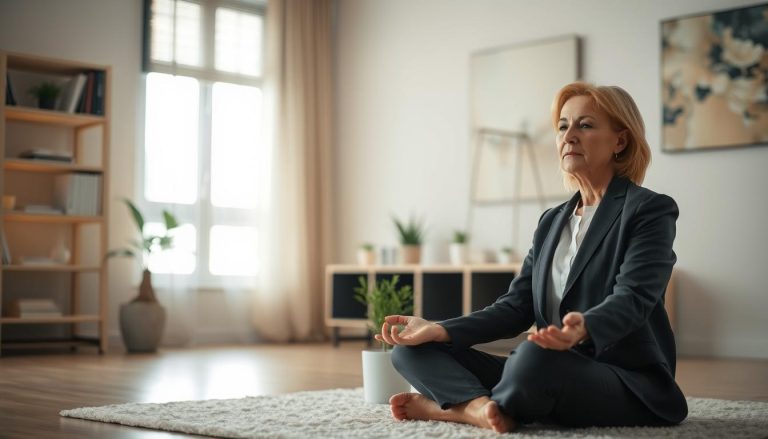

In today’s fast world, it’s key to learn how to handle stress well. Emotional intelligence is a powerful tool for this. It helps you understand and control your feelings, making it easier to deal with stress.
By learning to regulate your emotions and using effective stress management, you can improve your life. This article will show you how to boost your emotional skills and manage stress better.
Key Takeaways
- Emotional intelligence is crucial for managing stress levels.
- Understanding your emotions can lead to effective stress management techniques.
- Emotional regulation plays a significant role in coping with stressors.
- Practising relaxation methods can enhance your emotional skills.
- Developing self-awareness contributes to better emotional control.
- Mindfulness techniques can significantly relieve stress.
Understanding Emotional Intelligence and Its Role in Stress Management
Emotional intelligence (EI) is key in how we handle stress and challenges. It’s about knowing and managing our emotions and those of others. This skill is essential for good relationships at work and home.
Daniel Goleman, a famous psychologist, outlined EI’s main parts. These include knowing ourselves, controlling our emotions, staying motivated, understanding others, and being good at social interactions.
Defining Emotional Intelligence
Emotional intelligence helps us deal with our emotions clearly and wisely. People with high EI can spot their own and others’ feelings well. This makes communication better and understanding deeper.
This skill is crucial for managing stress. Those who are good at emotional intelligence can use their feelings to stay strong when things get tough.
The Connection Between Emotional Intelligence and Stress
Studies show a clear link between EI and managing stress. Those who are good at controlling their emotions can handle stress better. They use techniques to keep their mental health in check.
By learning about emotional intelligence, we can find ways to improve our emotional health. This helps us manage stress more effectively.
Emotional Skills to Manage Stress Effectively
Learning emotional skills is key to handling stress. Knowing and understanding your feelings is the first step. It helps you spot what causes stress, keeping your emotions in check.
There are many ways to improve this skill. These methods help you deal with everyday problems better.
Identifying Your Emotions
Being able to spot your emotions is crucial. Writing in a journal daily can help you see patterns in your feelings. It’s also good to check in with your emotions throughout the day.
These habits make you more aware of how you feel. This way, you can think before acting when stress hits.
Using Emotional Skills to Enhance Self-awareness
Knowing yourself is vital in managing stress. It helps you make better choices and solve problems when things get tough. Mindfulness, like meditation, helps you watch your thoughts and feelings without judging.
Workshops on emotional intelligence are great for learning these skills. They help you connect with yourself and others more deeply.
Strategies to Cultivate Self-control and Remain Calm
Self-control is key in managing stress. It helps us handle tough situations with ease. Being able to stay calm under pressure shows we’re emotionally strong. Knowing how important self-control is can really help us deal with stress better.
The Importance of Self-control in Stressful Situations
Self-control acts as a shield against stress. It lets us think before we act, avoiding hasty decisions. By controlling our emotions, we stay calm even when things get tough. Studies show that those with good self-control do better in life and work.
This skill is not just good for us. It also helps us get along better with others. This leads to better emotional health for everyone.
Techniques to Improve Your Self-control
There are many ways to boost self-control and stay calm. Here are some tips:
- Mindfulness exercises: Mindfulness helps us stay in the moment. It reduces our tendency to act on impulse.
- Cognitive restructuring: Changing negative thoughts into positive ones helps us stay positive and manage stress better.
- Setting clear objectives: Having clear goals helps us stay focused and disciplined.
- Developing routines: Regular habits build self-discipline. They create a structured environment where self-control thrives.
- Accountability partnerships: Sharing goals with someone you trust can boost your motivation. It helps you stick to your self-control practices.
Mindfulness Techniques for Stress Relief
Adding mindfulness to your daily routine can really help with stress and wellbeing. It makes you more present and focused on the moment. This way, you can handle stress better and live more calmly.
Practising Mindfulness in Daily Life
Here are some easy ways to start being more mindful:
- Mindful Breathing: Spend a few minutes each day just on your breath. Watch how you breathe in and out, letting other thoughts go.
- Mindful Eating: Enjoy your meals more by focusing on each bite. Using all your senses can make eating more relaxing and enjoyable.
- Reflection Time: Make time each day to think about your feelings. Writing in a journal or just sitting quietly can help you feel less stressed.
Mindfulness Exercises to Reduce Stress
Try these mindfulness exercises to help with stress:
- Body Scan Meditation: This helps you notice and release tension in your body. It’s a great way to relax.
- Guided Imagery: Imagine peaceful scenes to calm down. It’s like a mini-vacation from stress.
- Progressive Muscle Relaxation: Tense and then relax each muscle group. It’s a deep way to relax and be mindful.
Studies show mindfulness is a strong tool against stress and negative thoughts. By using these methods regularly, you can feel more at peace and live a healthier life.
Conclusion
Managing stress well depends on mastering emotional intelligence. This includes key emotional skills. By understanding and handling our emotions, we can find better ways to cope with stress. This helps us stay strong when faced with tough times.
Learning to control ourselves is also crucial. It helps us stay calm when things get stressful. By improving self-control, we can think before acting, which reduces stress.
Adding mindfulness to our daily lives is another great way to lower stress. Mindfulness helps us stay in the moment and feel more calm. As we grow in emotional skills, self-control, and mindfulness, we can handle stress better. This lets us succeed in our daily lives.